
Planning a new kitchen in Nottingham is exciting, but it can also feel overwhelming. There are layouts to consider, colours to choose, appliances to compare and practical details that can make a big difference to how your kitchen works day to day.
At Leivers & Vale, we help homeowners across Nottingham and Nottinghamshire design kitchens that are not only beautiful, but also practical, comfortable and built around real life. Our FlowLogic design approach focuses on how you actually move through and use your kitchen, to remove everyday frustrations before the first cabinet is ordered.
Whether you are replacing an outdated kitchen, renovating your home or planning a complete redesign, here are some of the key things to think about before you get started.
1. Start With How You Use Your Kitchen
Before choosing doors, worktops or colours, think about how you actually use your kitchen.
Do you love cooking from scratch? Do you need space for family meals? Is your kitchen the main social area of the home? Do you need better storage, more worktop space or improved lighting?
A good kitchen design should reflect your lifestyle. For example, a busy family kitchen may need durable surfaces, clever storage and an easy-to-clean layout, while a kitchen designed for entertaining may benefit from an island, open-plan seating or feature lighting.
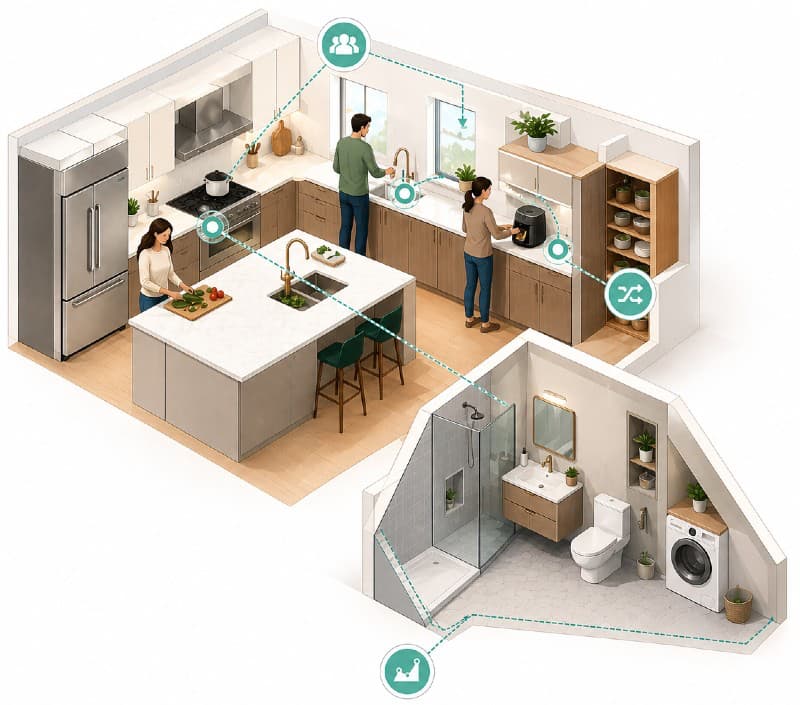
This is where FlowLogic makes a real difference. Rather than starting with a catalogue, we start by looking at your everyday habits and the small frustrations in your current space. These might include having to cross the room to make a cup of tea, struggling to reach the items you use most often, or finding that appliances and drawers get in each other’s way.
2. Think About Flow Before Style
It is easy to focus on colours and finishes first, but the flow of the room is what makes a kitchen work properly.
For many years, kitchen design focused on the traditional “work triangle” between the sink, fridge and cooker. That still matters, but modern kitchens have changed. Today, kitchens are often social spaces, family spaces and workspaces as well as places to cook.
A successful kitchen should make it easy to move between preparing, cooking, cleaning, storing and socialising. If two people are cooking at once, the room should not feel cramped. With the dishwasher door open, it should not block a key walkway or stop you opening another drawer. If you are preparing food, the bin, sink and worktop should be close enough to use naturally.
FlowLogic helps us plan these details early, so your kitchen performs as beautifully as it looks.
3. Choose the Right Layout for Your Home
The right kitchen layout depends on the size and shape of your room, the position of doors and windows, and how you want the kitchen to connect with the rest of your home.
Common kitchen layouts include:
- L-shaped kitchens
- U-shaped kitchens
- Galley kitchens
- Open-plan kitchens
- Kitchens with islands or peninsulas
Each layout has its advantages, but the best choice is the one that supports how you live. For example, an island can be a fantastic feature, but only if there is enough space to move around it comfortably. A galley kitchen can work extremely well when storage and appliance positions are carefully planned.
The goal is not simply to fit units into a room. The goal is to create a kitchen that feels natural to use every day.
4. Make Storage a Priority
One of the biggest reasons people choose a new kitchen is to gain better storage.
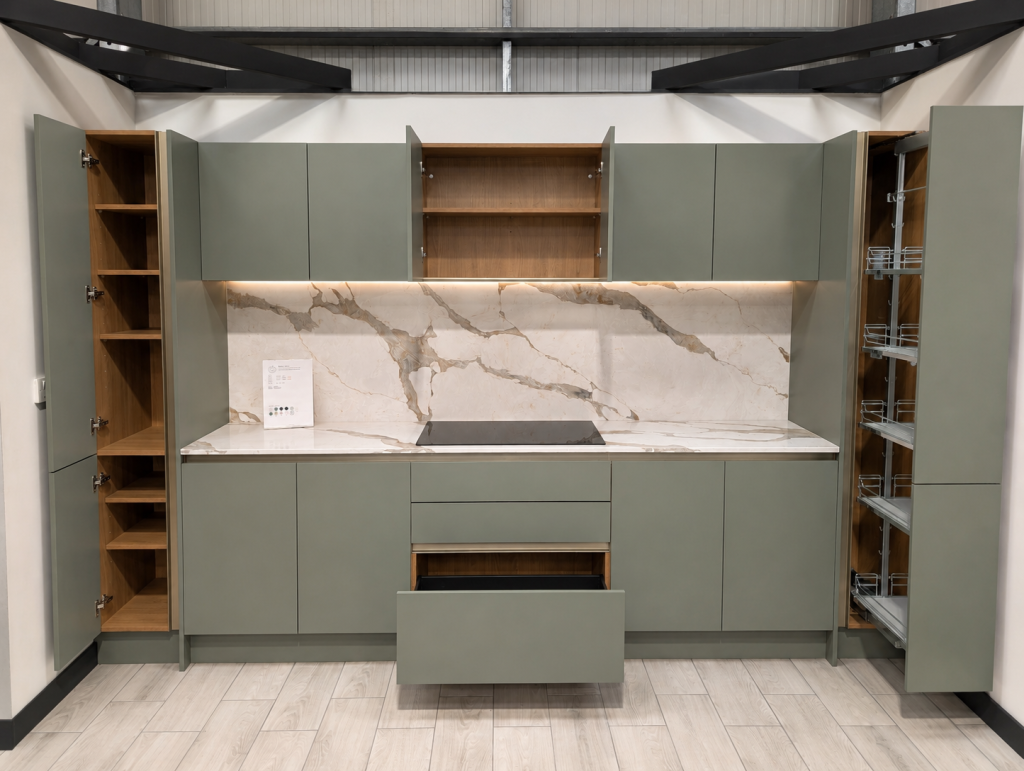
Modern kitchen design offers many ways to make better use of space, including deep drawers, pull-out larders, corner storage, integrated bins and tall cupboards. Even smaller kitchens can feel much more spacious when storage is planned properly.
Think about what you currently struggle to store. Pots and pans, small appliances, food, cleaning products and recycling all need a practical place.
With FlowLogic, storage is planned around instinctive use. Items should be placed where you naturally reach for them. Everyday mugs should be close to the kettle or coffee machine. Pans should be near the hob. Cleaning items should be practical but safely positioned. The aim is to reduce clutter, save unnecessary movement and make the kitchen easier to use.
5. Plan Your Preparation, Cooking and Cleaning Zones
A well-designed kitchen usually has clear zones.
Your preparation zone should have enough worktop space and easy access to the sink, bin and food storage. The cooking zone should give you safe, comfortable access to the hob, oven and utensils. Your cleaning zone should make it easy to load the dishwasher, rinse items and keep surfaces clear.
These zones do not need to be complicated, but they do need to be thought through. Small decisions can make a big difference. For example, placing the bin close to the prep area can make cooking easier. Positioning the dishwasher near storage can make unloading quicker. Making sure appliance doors do not clash with cabinets can prevent daily frustration.
Good kitchen planning is about removing these friction points before they become part of everyday life.
6. Choose Materials That Suit Your Home
Your kitchen needs to look good, but it also needs to stand up to daily life.
Worktops, doors, flooring and splashbacks all affect the appearance, durability and maintenance of your kitchen. Gloss finishes can create a bright, modern look, while matt finishes often feel softer and more understated. Wood-effect finishes can add warmth, while stone-effect worktops can create a more premium feel.
When choosing materials, think about more than just how they look. Consider how easy they are to clean, how hard-wearing they are, and whether they suit the way your household uses the kitchen.
A family kitchen, for example, may need surfaces that are especially practical and easy to maintain. A quieter kitchen for a couple or smaller household may allow for a different balance of style and function.
7. Consider Lighting Early
Lighting can completely change how a kitchen feels.
A good kitchen lighting plan usually includes a mix of practical and decorative lighting. Ceiling lights provide general brightness, under-cabinet lighting helps with food preparation, and pendant lights can create a feature over an island or dining area.
Lighting should be planned around how the kitchen will be used. Food preparation areas need clear task lighting. Social spaces may benefit from softer lighting. Dark corners, tall units and worktop shadows should all be considered at the design stage.
Natural light is also important. If your kitchen feels dark, lighter colours, reflective surfaces and carefully placed lighting can help make the space feel brighter and more open.
8. Plan Your Appliances Carefully
Appliances should be chosen as part of the overall kitchen design, not as an afterthought.
Think about the appliances you use every day and where they should be positioned. Ovens, hobs, extractor fans, dishwashers, fridge freezers and washing machines all affect the layout of your kitchen.
Modern kitchens may also include appliances and features such as boiling water taps, air fryers, wine coolers or integrated microwaves. These can be extremely useful, but only if they are positioned properly.
FlowLogic considers how these appliances affect movement around the room. The aim is to make sure everything is easy to access, safe to use and positioned with purpose.
9. Be Realistic About Budget
A new kitchen is a major investment, so it is important to be clear about your budget from the beginning.
Your budget should include more than just cabinets and worktops. You may also need to consider appliances, flooring, lighting, plumbing, electrics, tiling, decoration and installation.
The most expensive kitchen is not always the best kitchen. A well-planned kitchen that uses space intelligently can often feel better, work better and last longer than a more expensive kitchen with a poor layout.
Speaking to a kitchen specialist early can help you understand what is realistic for your space and budget. It can also help you avoid unexpected costs later in the project.
10. Use 3D Design to Visualise the Space
One of the most helpful parts of planning a new kitchen is seeing the design before work begins.
A 3D kitchen design allows you to visualise the layout, colours, storage and overall look of the room. This makes it easier to compare ideas, make confident choices and spot any changes you would like before installation starts.
It is also a useful way to understand how the room will function. You can see how units, walkways, appliances and worktop areas work together before committing to the final design.
For many homeowners, this stage turns a rough idea into a clear plan.
11. Visit a Local Kitchen Showroom
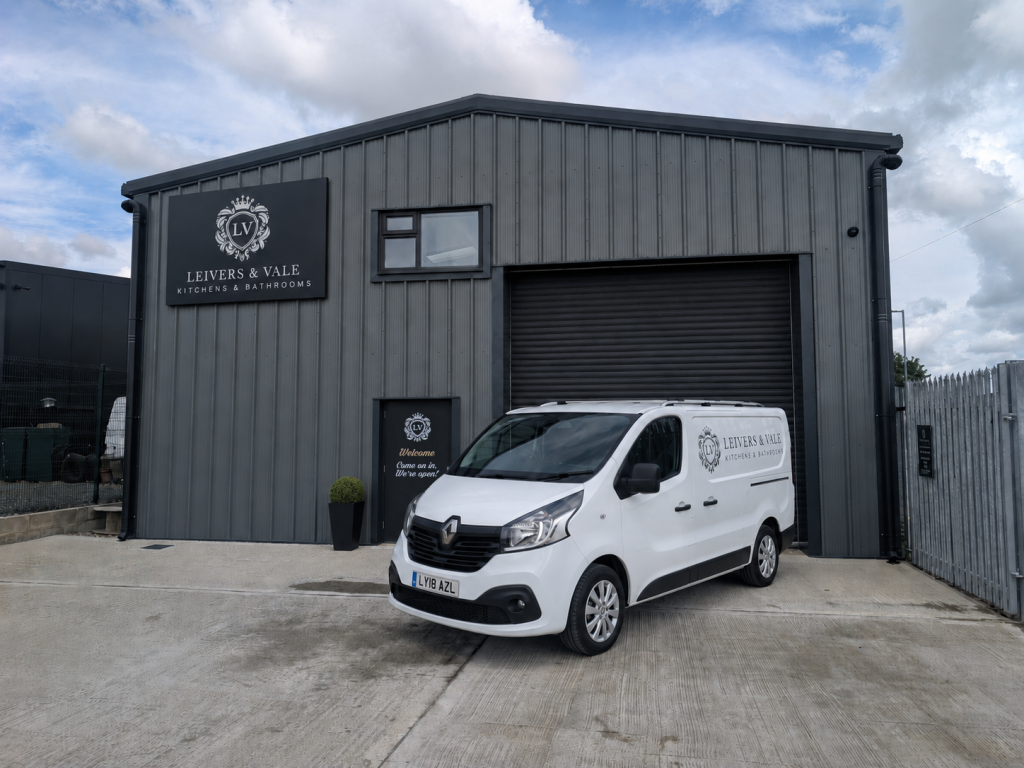
Looking online is useful, but there is no substitute for seeing kitchens in person.
Visiting a kitchen showroom gives you the chance to compare colours, finishes, handles, worktops and storage options properly. You can see the quality up close, ask questions and get advice from people who understand how kitchens are designed and installed.
If you are based in Nottingham or Nottinghamshire, visiting a local showroom can also make the whole process easier, from initial design through to installation.
12. Work With a Team That Can Manage the Whole Project
A kitchen renovation involves several stages, and good planning makes a big difference.
From design and product selection to preparation, installation and finishing touches, it helps to work with a team that understands the full process. This can make the project smoother, reduce stress and help ensure the finished kitchen matches the original design.
A kitchen should not just look good on the day it is installed. It should continue to feel practical, comfortable and enjoyable to use for years to come.
Ready to Start Planning Your New Kitchen?
If you are thinking about a new kitchen in Nottingham, Leivers & Vale can help you plan a space that suits your home, your lifestyle and your budget.
Our FlowLogic design approach looks beyond colours and cabinets to consider how your kitchen will actually work in everyday life. From movement and storage to lighting, appliances and installation, we help you create a kitchen that feels as good to use as it looks.
Visit our Netherfield showroom to explore kitchen styles, discuss your ideas and book a free 3D kitchen design consultation with our friendly team.
Whether you already know exactly what you want or you are just starting to gather ideas, we would be happy to help you take the next step.